

Pretotyping: The complete guide
Pretotyping tests whether an offer has demand before it is built or launched. This guide explains the method, the main variants, how a test runs and the mistakes that make results unusable.

In short
- Pretotyping measures whether people would buy or sign up for an offer before it exists.
- A pretotype tests whether something is wanted, a prototype whether it can be built. The first question comes first.
- For product, pricing and market decisions, the painted door test is usually the most meaningful variant.
- A test becomes meaningful through a clear question, realistic offers and only one difference per variant.
- Pretotyping complements surveys and market research with real purchase behaviour.
In short: Pretotyping measures whether people would buy or sign up for an offer before it is on the market. It measures behaviour, not the answer to a question. Gartner added pretotyping to the Hype Cycle for Innovation Practices in 2024.
What is pretotyping?
In pretotyping, an offer is presented so realistically that people can decide for or against it just as they would in everyday life, even though it does not exist yet. That can be a new product, a new price, a plan, a value proposition or a product variant.
The term goes back to Alberto Savoia, who coined it at Google and later described it in his book “The Right It”. The idea behind it: before you build something properly, make sure you are building the right thing.
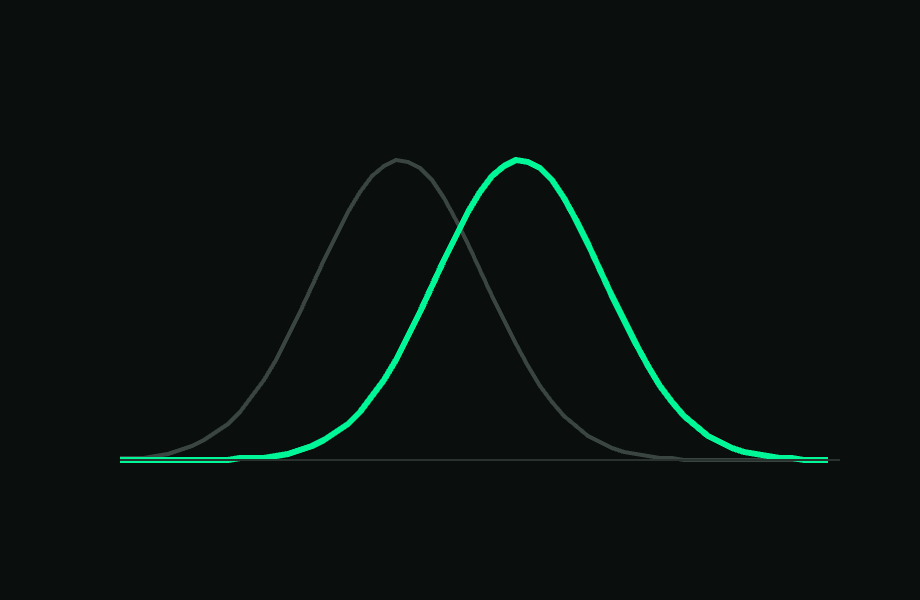
The decisive difference to surveys is what gets measured. A survey shows what people say. A pretotype shows what they do when they face a real purchase decision. There is often a large gap between the two, the say-do gap.
Pretotyping and prototyping
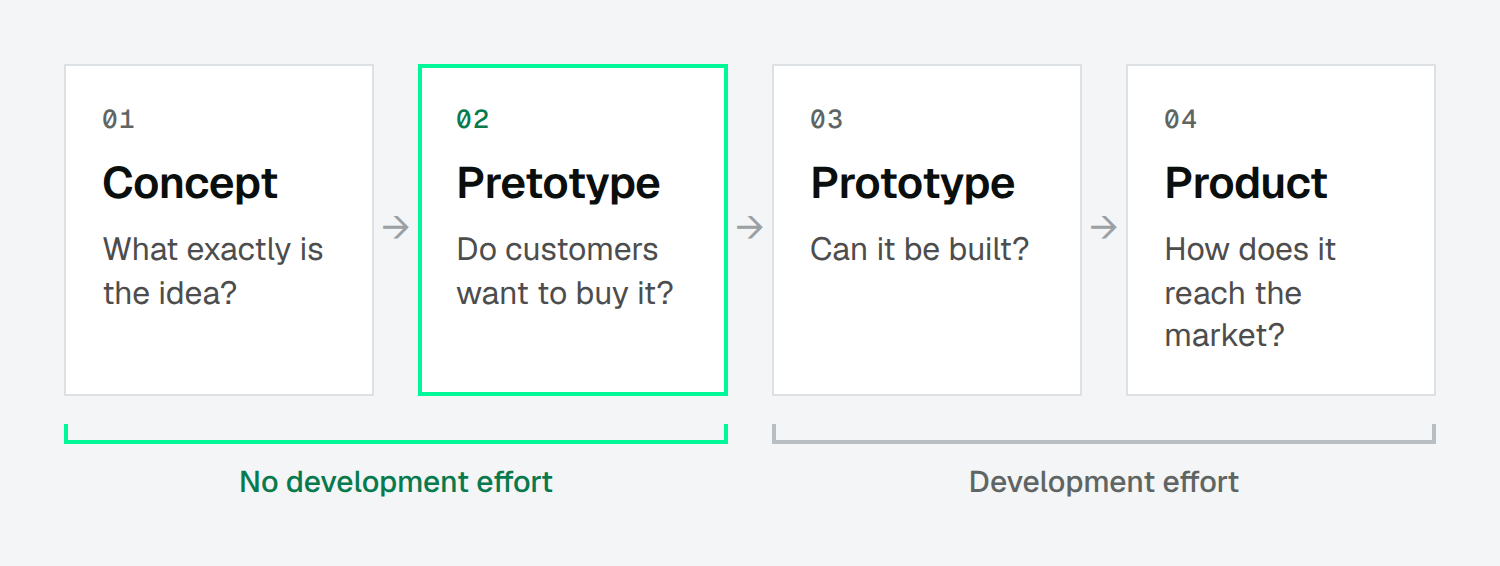
A prototype answers whether something can be built and how it works. A pretotype answers whether anyone wants it. The second question should be answered first, because it is cheaper to settle and decides whether a prototype is worth the effort at all.
- Prototype: a working model, tests feasibility and use, requires development.
- Pretotype: a realistic presentation of the offer, tests demand and willingness to pay, requires no development.
Methods at a glance
Pretotyping is an umbrella term. Which variant fits depends on what you want to validate.
Painted door test
An offer that does not exist yet is shown as a complete, realistic offer page, with product, price and purchase path. Anyone who wants to buy or sign up then learns transparently that the offer is not available yet. What is measured is how many people actually decide to buy, per variant. This variant is particularly suited to comparing several variants, such as prices, plans or value propositions.
Fake door test
A single entry point, for example a button or menu item in an existing product or shop, leads to a feature that does not exist yet. What is measured is how often it is used. That shows interest but says little about price or willingness to buy.
Smoke test
Demand is tested via ads and a simple landing page, often with the aim of collecting email addresses or pre-orders. Smoke tests are fast, but they measure attention rather than a concrete purchase decision.
For product, pricing and market decisions, the painted door test is usually the most meaningful variant, because people make a complete purchase decision and variants can be compared cleanly.
How a test runs
A test always follows the same logic. At Horizon, a new test takes around four weeks to a result, a follow-up test based on an earlier one around one week.
- Sharpen the question: Which decision needs to be validated, and which variants are on the table? Up to six variants per test.
- Build the offer: A realistic offer page is created for each variant, with your brand or unbranded. Only what is being tested differs between the variants.
- Let customers decide: Ads bring people from the target group to the pages, where they decide in their familiar online environment. Nothing is sold. Anyone who wants to buy learns that the offer is not available yet.
- Use the result: The purchase or sign-up intent per variant is evaluated, with statistical context and a clear data analysis.
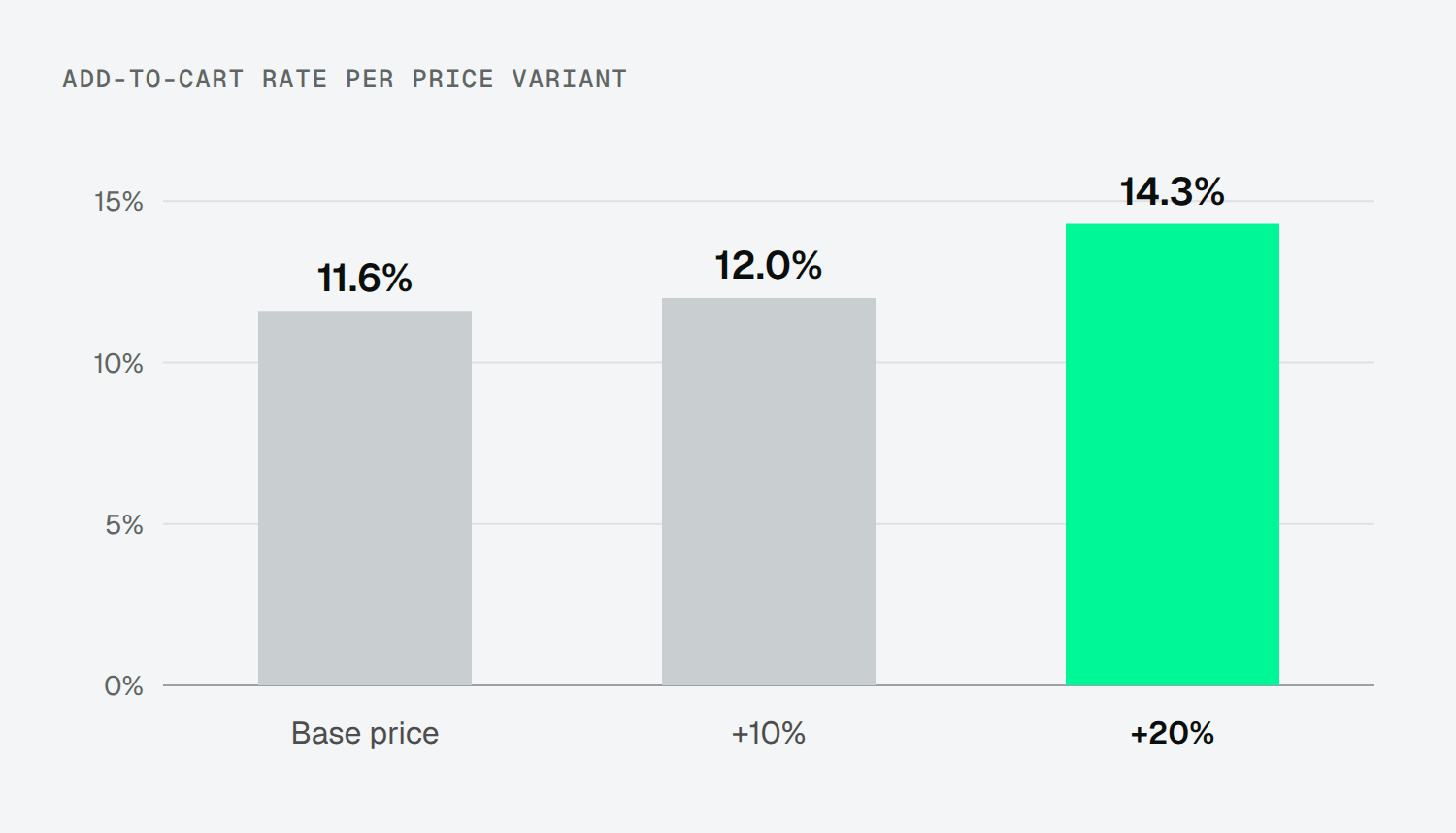
An example from a client test: three price variants of the same product on otherwise identical offer pages. The most expensive variant, 20% above the base price, achieved the highest add-to-cart rate at 14.3%. At the base price it was 11.6%.
Common mistakes
Most unusable results share the same causes:
- Several differences at once: If variants differ in price, image and copy, you cannot tell what made the difference.
- Too little realism: A sketchy page without a price or purchase path measures curiosity, not a purchase decision.
- The wrong target group: The people who see the ads need to match the people who are later supposed to buy the offer.
- Confusing clicks with purchases: The variant with the most ad clicks does not necessarily bring the most purchases. What counts is the purchase or sign-up intent on the offer page.
- Stopping too early: Results need a sufficient number of visits per variant before they are robust.
Pretotyping in companies
In companies, pretotyping rarely fails because of the method, but because of alignment and effort. Three things make the difference:
- Align once: Legal, privacy and procurement are involved once, in parallel with the first test design, and not again for every single test.
- Test incognito: Tests can run with your brand or unbranded. With Horizon, Horizon appears in the legal notice and privacy policy, and campaigns run in Horizon's ad account. That way it does not become visible early which brand is testing which idea.
- Make it a fixed stage: Pretotyping delivers the most value when it is not a one-off, but a fixed stage before product, pricing and market decisions. It complements surveys and market research with real behaviour.
Frequently asked questions
Is pretotyping the same as a painted door test?
No. Pretotyping is the umbrella term. The painted door test is one variant of it, in which a complete offer with price and purchase path is shown.
Is anything sold?
No. Anyone who wants to buy or sign up learns transparently that the offer is not available yet. What is measured is the decision, not revenue.
Does pretotyping replace a survey?
No, it complements it. Surveys and conjoint show what people say and weigh up. Pretotyping shows which variant they would actually buy.
How long does a test take?
At Horizon, around four weeks from question to result. A follow-up test based on an earlier one takes around one week.
About the author
Daniel Putsche
Founder and CEO of Horizon. Works with product, pricing and insights teams to base decisions on measured purchase behaviour.
Related articles

Which decision do you want to validate?
Bring your decision question, we sketch a possible test design with you. No preparation needed on your side.

You will talk to Daniel Putsche
Founder & CEO, 30 minutes