

A price increase without losing demand? How Virgin Pure tested its subscription price before the rollout.
Virgin Pure wanted to raise the monthly price of its water dispenser without losing customers. A test with four prices showed how far demand holds, and a second test showed how much an anchor price makes a difference.

In short
- The decision: how far can the monthly subscription price rise before demand is lost?
- The test: four prices, four otherwise identical offer pages, 3,574 consumers, seven days in the field, under the Virgin Pure brand.
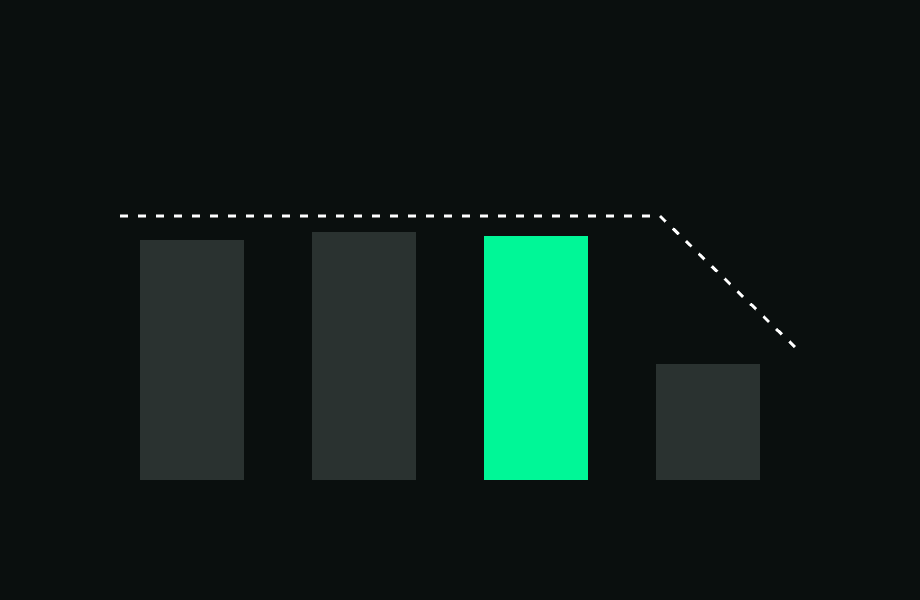
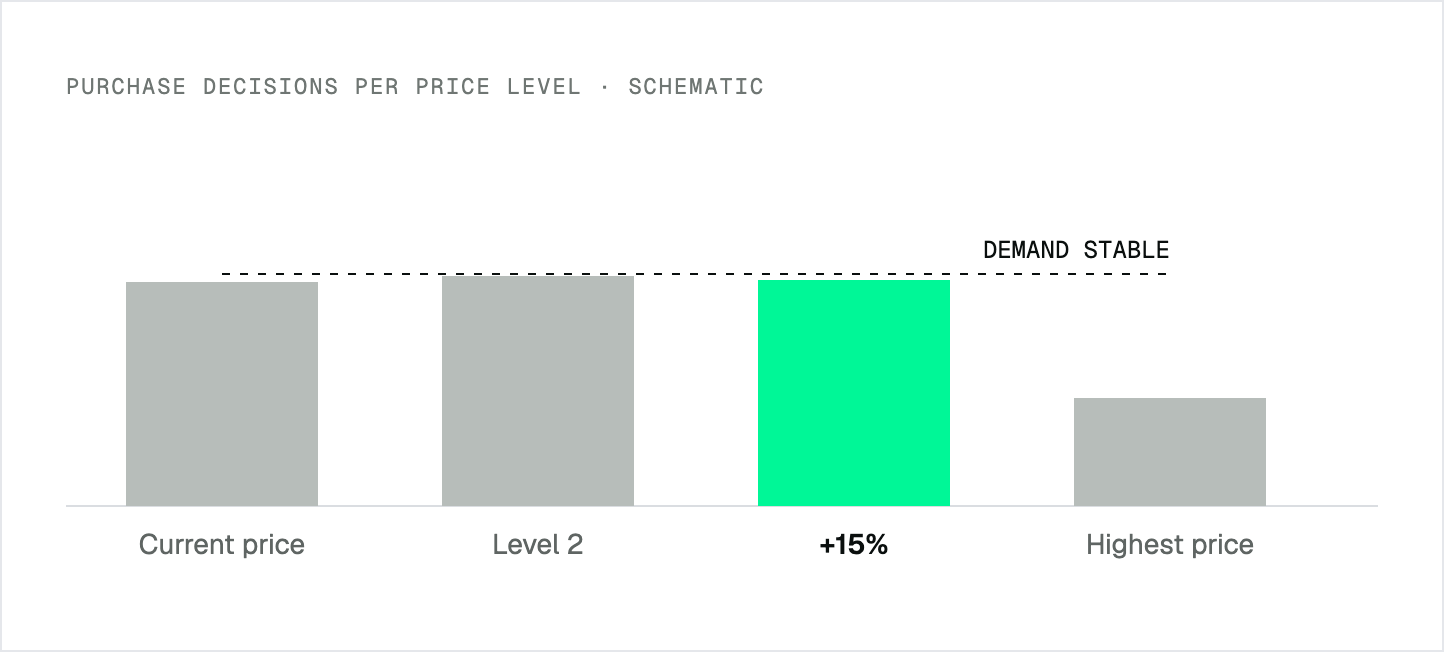
- The result: demand held steady up to an increase of 15% and only dropped at the highest price. Virgin Pure raised its price by 15%.
Virgin Pure sells a smart water dispenser on a monthly subscription in the UK, directly via its own website. Rising costs made a price adjustment necessary. What was unclear was how far the price could rise without prospects dropping out. Classic surveys had not provided a reliable answer.
The decision
The question was concrete: which monthly price earns the most once demand is taken into account? Too cautious a step would have given away margin, too big a step would have cost new customers. Because price is the strongest profit lever, a lot was at stake: a 1% improvement in price raises operating profit by 11.1% on average (Marn and Rosiello, Harvard Business Review, 1992).
The test design
- Four variants of the same offer page, each with a different monthly price. Everything else was identical: image, copy, layout, scope of service.
- Comparable groups from the target audience, randomly assigned to the variants, reached via ads showing the respective price.
- What was measured was the purchase decision on the offer page. Directly afterwards, visitors learned that no purchase had taken place.
- 3,574 consumers, seven days in the field, under the real Virgin Pure brand.
One detail made the result particularly robust: Virgin Pure sells through the same digital channel that was tested. The test situation therefore largely matched the real purchase situation.
The result
Up to an increase of 15%, demand was not lower than at the current price. Only at the highest price tested did it drop significantly. That made clear where the limit lies, and that the step up to it costs no measurable demand. Virgin Pure raised the monthly price by 15%.
The insights provided by Horizon enabled us to implement an astonishing 15% price increase with confidence.
Simon Vingoe · Former Marketing Director, Virgin Pure
The second test: how much an anchor price makes a difference
A follow-up test was no longer about the price itself, but about how it is presented: does a crossed-out reference price help, and if so, at what level? Variants without an anchor price and with anchor prices of different heights were tested. The best variant achieved a purchase decision rate around 30% higher than the variants with no anchor or one that was too high. A small change on the website with a big effect.
What can be transferred
- A price increase can be tested against real behaviour before the rollout, also for existing offers and under your own brand.
- Several price points show not only whether a price holds, but where the limit lies.
- After the price, look at the presentation: anchor price, term, packaging.
What the test does not show: how competitors react and how existing customers behave after an increase. You look at that separately. For choosing between specific prices, measured purchase behaviour is a much better basis than a stated willingness to pay.
Frequently asked questions
Was anything sold to visitors?
No. After the purchase decision, they learned that the offer cannot be ordered in this form. No payment was taken.
Does this also work with a brand developed for the test?
Yes. Many tests run under a brand developed specifically for the test, for example when your own brand should not be visible.
About the author
Daniel Putsche
Founder and CEO of Horizon. Works with product, pricing and insights teams to base decisions on measured purchase behaviour.
Related articles




Which decision do you want to validate?
Bring your decision question, we sketch a possible test design with you. No preparation needed on your side.

You will talk to Daniel Putsche
Founder & CEO, 30 minutes