

How Liebherr validated its next fridge feature before building it
Four technologies, one to pick, zero prototypes. Plus: why buyers rank smart features near last.
In this issue
Liebherr's innovation lab THE LAB! had four antibacterial fridge technologies in development and had to pick one. In a 90-second video the team shows how buyers made that call, before a single prototype existed. The same question sits behind a new Curion study: the features every flagship launch leads with rank near the bottom of what wins the purchase. We wrote up what that means for a roadmap. Both below.
Daniel Putsche, Founder & CEO, Horizon
The industry ships AI. Buyers still decide on reliability
Every appliance flagship of the past year led with intelligence: Samsung's Bespoke AI range, KitchenAid's camera-equipped smart oven at KBIS 2026, Xiaomi's AI air conditioner. Curion then asked 2,676 US buyers to name the one main driver of an appliance purchase. Long-term reliability came first with 46%, price and value second with 26%. Smart features got 2%. Asked separately about their relationship with appliance brands, only 7% said the latest innovation is what drives them.
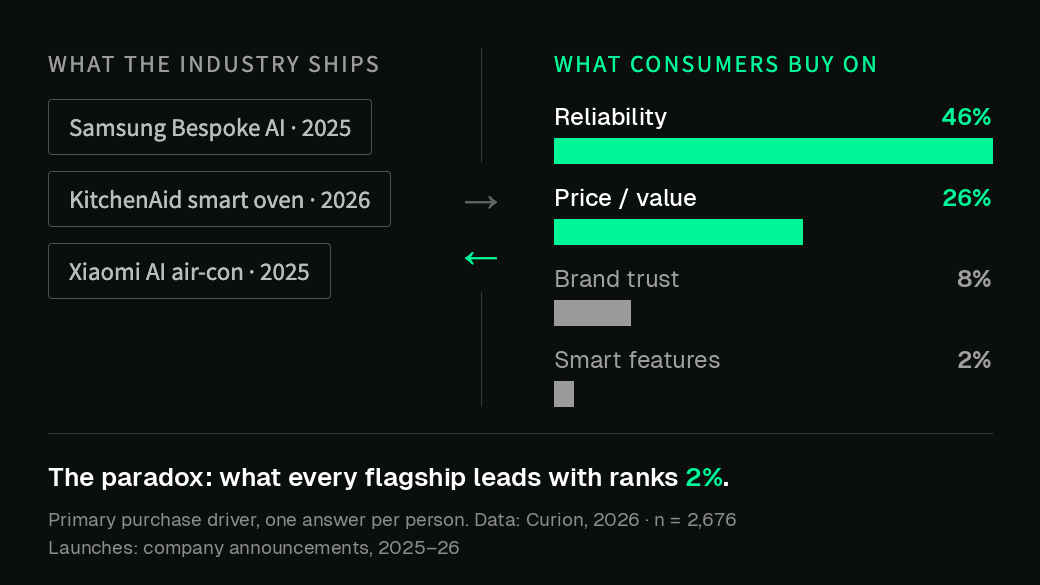
On a development cycle of 12 to 24 months, that gap is expensive. Our breakdown goes through where buyer confidence comes from, how the two age groups differ, what buyers say they would change, and why 35% are ready to switch brands right now.
Source: Curion, “The Great Appliance Paradox”, 2026 (n = 2,676) · company launch announcements
Durability just became an engineered claim, and a comparable one
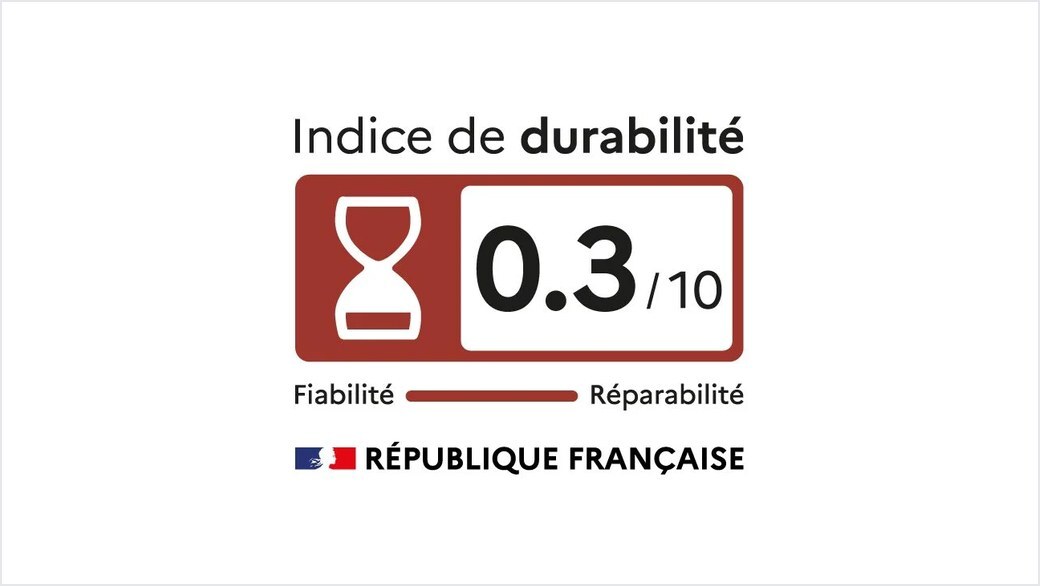
France already scores it. Since 8 April 2025 every washing machine sold there carries an indice de durabilité: one mark out of ten covering reliability and repairability, shown at the point of sale. At EU level the A–E repairability class sits on the energy label for smartphones and tablets only. Household appliances are expected to follow in an ESPR delegated act around 2027, member states must transpose the Right-to-Repair Directive by 31 July 2026, and makers already owe up to 10 years of spare parts on washing machines. The comparable claim arrives in stages, which leaves you a window to find out what durability is worth before it is mandatory.
Source: Décret 2024-316 (FR) · European Commission, ESPR working plan 2025–2030 · EU Right-to-Repair Directive
Four fridge technologies, one to pick. Liebherr let the basket decide
THE LAB! at Liebherr had four antibacterial functions in advance development. Instead of asking which one sounds best, Horizon measured which one people added to the basket, before a product existed. Four technologies, zero prototypes, one clear number one. In 90 seconds the team walks through the question, the test and the result.
More intelligence or a longer life: the market already has an answer, and it is testable before tooling
Two candidates compete for the same slot on the roadmap: the AI feature, or the durability claim the label is about to make comparable. Which one earns the purchase is a test-design question first. Three things we would put into the next appliance test:
- Keep one variant without AI features. A control on generic, non-AI standards tells you how much the AI features add. Skip it and you measure category demand instead.
- Run the repair proposition against the AI one. Frame durability the way the label will: a score, ten years of parts, a documented lifespan. Then let it compete with “does more”. If it converts better at the same price, you have a roadmap answer.
- Hold the price constant across variants. Then the conversion delta belongs to the proposition. Vary price only when willingness to pay is the question you set out to answer.
Which decision would you rather settle with your customers than in a meeting?
Bring us the decision you are least sure about. We sketch how to test it, no preparation needed on your side.